butter paper australasia : greaseproof architecture links 2000 - 2013

practice news in all places

20 hand-picked results
...

narrow to country

The Valencia Effect see more

Is this a sign of things to come? As austerity measures dig in, are “los indignados” of Spain wondering about the money that fed a cultural building boom? Where complex buildings were designed by foreign architects, who didn’t seem to know that their hefty fees were being added to the country’s debt.

Palau de les Arts Reina Sofia by Sergio Calleja (Life is a trip)
Photo: Sergio Calleja

Santiago Calatrava is in a puddle of a muddle in his home town, Valencia. The fourth-ranked United Left party (Esquerra Unida) has found the architect to be a handy scapegoat as the region nears bankruptcy. On a dedicated website Esquerra Unida lists allegedly corrupt dealings with the Comunidad Valenciana concerning fees for the City of Arts and Sciences. Perhaps they have also targeted Calatrava as both major political parties had a hand in commissioning him, and because his work is monument to that very recent era when a government would happily extend its debt to secure prestigious buildings and events.

The [Popular Party] government denied for years the information on contracts and payments to Calatrava, but the work of the United Esquerra parliamentary group has managed to uncover all the secrets of business of the Swiss architect with the money of the Valencians. Esquerra Unida

Fairfax papers have passed some news along from the Guardian. It trumpets that:“contracts were given to [Calatrava] via an unpublicised negotiating system establishing his payments as a percentage of the final cost of each project, which doubled or tripled’”. Then they reveal that he was paid, “for designing projects that never came to fruition.” The horror.

Santiago Calatrava, architect born in Valencia star but residing in Switzerland, has claimed about 100 million euros from the Generalitat Valenciana, with no IVA or tax paid in Spain. Esquerra Unida

They neglect to mention that Calatrava moved to Switzerland to do his civil engineering degree in 1975, not to evade spanish tax. If Calatrava’s Swiss office had charged IVA (Spain’s GST equivalent), it would have been extra to the fee, and passed back to the government. [ Update: In 2008, Calatrava’s website did mention offices in New York and Valencia – it no longer does. ]

His most emblematic [project] is the City of Arts and Sciences, which has cost over 1,100 million euros and is still unfinished and has various operating problems. Esquerra Unida

Calatrava was signed on in 1991 to a 625M Euro project. The project was inaugurated in 1998, with the final building, Palau de les Arts Reina Sofía, being opened in 2005. According to The Guardian, the ‘city’ runs at a loss.

“…the costs of reproduction, models, photography, travel, travel and expenses … are billed separately and paid within one month from the filing of the bill.” exclaims El Mundo.

Apparently journalists haven’t heard of disbursements. Or percentage fees… Calatrava initially charged 4.5% of the budgeted cost for architecture and engineering, and 6.5% for “construction management”. In later buildings this was revised to “11% to 12%” of the final cost of construction, highly controversial to El Levante-EMV, which refers to the City of Arts and Sciences as “the crime scene”.

Valencia bankruptcy

Calatrava is an easy target in a deep recession. His main faults? 1. He left Spain. His Spanish wikipedia page is… er rather negative compared to the English one. 2. He didn’t audit the government, and 3. His buildings don’t come cheap. They are expensive and distinctive, which is what the government of the day wanted, to attract major events and tourism, and build its own pyramids.

Over the last decade, surfing on a property boom, Valencia spent billions hosting the America’s Cup sailing competition and the European Grand Prix motor race, launching Hollywood-style movie studios, and building the biggest aquarium in Europe, a Sydney-style opera house and several museums. Reuters May 1st [ link ]

“The “big events” policy is responsible for 13% of the region’s current debt, which has been estimated at close to 20 billion euros. “Looking beyond the surface of wealth and excess, this superficial economic model made us poorer.” Vincent Soler, Professor of Applied Economics at the Univeristy of Valencia. [ link ]

One of the worrying things about this politically motivated kerfuffle is how it has been reported. Many news services have let these claims about dodgy contracts slip through, without noticing that a normal contract for architectural services looks around about the same. Maybe not for much longer?

14.05.12 in practice 

Architect / protaganist: Santiago Calatrava

comment

They shoulda come to me; I’d have done it for half that fee.
A quarter that fee.
Hell I’d have done it for 10% of that 10% or 12%.
To quote Luigi of WA Salvage;
“We ain’t fancy, but we’re cheap.”

by Patrick Irwin on 21 June 12 ·#

page listing related:   in  Spain   Valencia   Valencia  
 

Councils and fees see more open website in same window

Grand Designs (Oz) presenter Peter Maddison recently advised Ballarat’s media what to do with its Civic Hall project, which was mainly not to ape historic styles.

After that he gave a tip or two on how to get the best results from an EOI / public tender process:

“A lot of younger architects work for nothing and try to take full control of a building. You need to find an architect with the right qualifications and capabilities, go through the process and select the one that is best.”

A spot of resentment there perhaps. But having seen a few public tender results over the years, I don’t think this practice of under-bidding is linked to age. A number of practices give quickie design services to councils at a cut rate price, and it looks it. Meanwhile many younger practices devote themselves to council projects they have won on cost, thinking that it is the only way to cancel out poor scores on the other evaluation criteria. Neither do any favours to architects wanting to do good work for a good fee, but a little reading between the lines of the tender documents, and a drive around the municipality could give a fair idea of which way a council swings. Or you just don’t do work for councils…

16.02.11 in practice 

comment

page listing related:   in  Australia   Victoria   Ballarat  
 

Office see more

Another way to sell your practice. Sell your office. From David Baker and Partners, San Francisco. It comes complete with bicycle hangers and compost bins.

Db+P Architects: The Office from Db+P, Architects on Vimeo.

03.12.10 in practice video-clips

Architect / protaganist: David Baker + Partners

comment

Sage advice see more open website in same window

Rather blunt warning to a potential architecture student. Content warning: Language is that of an architecture office on a bad day.

tip: FDL

05.11.10 in practice video-clips

comment

Funny video but not quite accurate, although I do snort a lot of coke I am totally where I wanna be at with my architecture career right now (and I’m only a student). I reckon the industry is going to hell because of cynics like this. Send messages of support and love for such ideals to sebsta360@hotmail.com

by Si-fi on 16 November 10 ·#

page listing related:  
 

Institutional origins see more

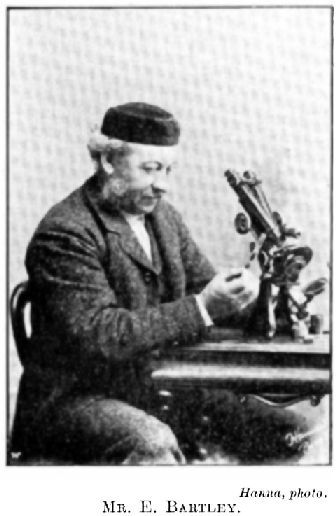
edward bartley
1905 NZIA Auckland Branch president Edward Bartley .

One from the Really Old Web. I think I have just stumbled across the issue that caused New Zealand architects to unite and form an institute (now known as the NZIA ). Way back in 1905 the builders of New Zealand, having formed the NZ Federated Association of Builders, were trying to introduce a standardised building contract. This lead to an “acute” disagreement between architects and builders, causing much construction to halt.

The Wellington Association of Builders tried to clarify the dispute for the Evening Post in a letter of September 18th, 1905. Here are some extracts.

architects vs. builders

Some [contracts] were so one-sided and stringent that when those concerned went to a legal man for advice, they were told that it was a waste of time to advise builders who were mad enough to sign… so it was determined to endeavour to get one uniform set of general conditions for the colony…

The question then arose as to the best means to adopt to get the desired change. It was found that only one or two centres had Associations of Architects – and these might be called dead. In other centres (Wellington included) there was no such association, so it was deemed impossible at that stage to approach the architects, there being no cohesion between them, and each centre thinking, as they still think, that their own particular set of conditions was the best in the colony.

I well remember that the clause that provides for the payment of 1 1/2 per cent. by the successful contractor to the architect for working drawings was one of the bones of contention…

It was decided that each Builder’s Association should approach on a given date the architects in their own district, and get them to adopt them…

So the Wellington builders tried to come to an arrangement in February 1905 with the five or six Wellington architects who responded to their invitation to discussions. In July the architects rejected most of the clauses. The sticking points for architects of the day were around what we now call Defects Liability Periods and Retentions – still troublesome today. The builders were most unhappy that these architects were suggesting a “maintenance period” of “six months and more”. Back to the letter:

If there is one thing these conditions will do, they will make the architect more particular as to how he draws his plans, and especially more particular as to how he draws up his specifications. They want to be straightforward and plain, so that there can be only one meaning to them…

[Builders] have sought to confer with the architects; but unfortunately whilst the builders are united, and therefore strong, the architects are so many units, jealous of each other. When they join hands and send delegates with the power to act, the New Zealand builders will be only to glad to meet them and give them a good time, too.

The builders suggested a twleve month trial of the new conditions. Ten days later, an Evening Post reporter spoke to a “leading architect” and learnt that the architects were about to take action.

It is understood that while the Wellington architects are willing to have a conference, they desire that it shall be one representative of the whole of the colony on each side. The machinery for this already exists in the NZFAB, but the architects of this country are not yet similarly banded. An institute is now being formed in Wellington, however, and a meeting is to be held next Monday to draw up rules, etc… Steps are being taken to form with the least possible delay a Federation of New Zealand Architects that will be able to make definite and binding arrangements on behalf of the architects of the colony in all matters affecting their interests.”

NZIA

The institute was quickly established, and all was sorted by the end of the year.

From the Otautau Standard and Wallace County Chronicle, October 31, 1905 .

Builder's dinner

02.09.10 in guilds practice

comment

Good stumbling.

by Paul Litterick on 9 September 10 ·#

page listing related:   in  New Zealand  
 

Sharing it around see more open website in same window

Richard Rogers on Rogers Stirk Harbour:

“The directors have no ownership, we have no shares and we don’t get anything when we leave the practice.’‘

Instead, all profits get distributed to charities chosen by staff, and to staff based on their ‘points’. Wonder what happens when they go into the red.

29.05.10 in practice 

Architect / protaganist: Rogers Stirk Harbour + Partners

comment

The opposite of stimulus see more open website in same window

Still in Chicago – the Tribune has a great architecture blog – the council there (still under Mayor Daley) has decided to ask architects and others to reduce their fees on current contracts by 10%. That’s after asking for a 2% drop last year. Tough huh? Especially so because the council’s, “challenging procurement, permitting and payment process already represents a financial burden to many architecture and design firms”, according to the AIA’s local VP.

It’s voluntary, but the article quotes someone warning of, “the ramifications of not accepting these conditions with respect to future project selections and client relationships”.

15.05.10 in practice 

comment

page listing related:   in  United States   Illinois   Chicago  
 

Over-budget in Kinglake see more open website in same window

Is The Age getting sponsored by the HIA, did an architect just make a shocking mistake, or did they go to the wrong builder? A kinglake family’s efforts to rebuild come to nowt.

“They are reeling from the extra costs involved in having to rebuild to fire-resistant standards. They also made a mistake in asking an architect to design their new home. They told him the budget was $300,000 but his design was costed by builders at $900,000, so the $50,000 they spent on design and surveying for that project was lost.”

THE AGE

Tip: HD

20.04.10 in practice 

comment

same $50K spent on fees is $50K Red Cross Money – from donations fund?
distribution came with a letter signed by Hackountant like $ from the Govt.
letter said it was to pay for site cleanup. But Gro Con did that separately @ no charge to owners.
There r rumours about in locality of architect + owners who rushed in, rushed ahead and got drawings to a builder. price was on budget, but said builder stuck drawings in 4 permit as architect had not. ! BAL assessment later it was a Flame Zone. $ went beserk post that. Perhaps this one?

by hairdresser on 20 April 10 ·#

page listing related:   in  Australia   Victoria   Kinglake  
 

Cheap at a quarter the price see more open website in same window

A 2000sqm site in Auckland’s Paratai Drive, previously home to two dogs, is expected to sell soon for over $10M. Who would pay that? The NZ Herald asks “high end home” architect Architect Simon Carnachan . No problem he reckons – cashed up JAFAs like, “showing the world you’ve got the money and you’re not afraid to flaunt it. Success in New Zealand seems to be judged by wealth rather than anything else.” Presumeably a buyer would then build a house on said site, and Carnachan thinks they’d get a bargain.

“Building high-end homes is still relatively cheap in New Zealand – about $700 to $800 a square foot compared with up to $5700 per square foot for expensive houses in England”. Cripes which planet is that on – $700 per square foot is about… NZ$7,534 per square metre. And the brits pay $61,354 per square metre huh? How??

10.11.09 in practice 

comment

figures r correct.
$8000 M2 is getting lite for hi end aus but kiwis work cheaper?
if u doubt the euro figures check the price tag on hi end danny da golden boy german project home. yer simon dude is quoting outside xtremes of low and high for max argument enhancement but wots bespoke here is done low volume there + is still more by a quantum. thats how.

by hairdresser on 11 November 09 ·#

Building Commission says.. see more open website in same window

The Building Commission of Victoria has small profiles on many careers within the building industry. They forgot architecture, but most of the rest are covered. Including the draftsperson:

A draftsperson is responsible for drawing plans for houses, extensions and small commercial buildings… It is the draftsperson who, in consultation with their client, works out where to put the building on the block and provides detailed floor plan with measurements, along with pictures of what the building should look like.

Glad that’s all sorted.

12.08.09 in practice 

comment

The Building Commission is the body responsible for registration of draftsmen, building surveyors and the like as Registered Building Practitioners.
They are not to know that draftsmen in Architects offices are also responsible for holding the hands of Architects who have managed to con their way into registration as an Architects but do not know anyting about even the materials they might want to use. They end up ‘only’ being draftsmen anyway and an Architect in name only.

by Mark on 13 August 09 ·#

It was a simple post Mark, expressing bemusement at the omission of the architectural profession from the BC’s list of building careers.

It seems any public discussion between BDs and archs ends up in boring mud-slinging.

by peter on 13 August 09 ·#

The Building Commission is the representative body draftsmen and others but not Architects. I’ve done a quick scan of the RAIA website and there appears to be no mention of Drafters.

by Mark on 13 August 09 ·#

BC is a bit broader than that: The Building Commission is a statutory authority that oversees the building control system in Victoria. We ensure the safety, liveability and sustainability of our built environment.

I don’t think the BC represents anyone, though the linked Building Practitioners Board does register drafties etc in the same way that the architect’s registration boards register architects. RAIA not relevant (to this).

by peter on 13 August 09 ·#

Fair enough. Neither of us would not wish to deny either their share of the carports, garages and extensions market out there.

by Mark on 14 August 09 ·#

page listing related:   in  Australia   Victoria  
 

Pulling teeth? see more open website in same window

Will Alsop leaves architecture for painting:
“I love architecture but one of the things that gets up my nose, particularly in London, is that doing anything is like pulling teeth… There are so many hangers on and architectural advisers who know nothing and it gets in the way.”

Jonathan Glancey surveys other painter architects (including the sad tale of Charles Rennie Macintosh), and hopes that Alsop may return to the drawing board when the economy picks up. “As an architect, Alsop delights some people and riles others; here, though, is that rare thing – an architect who dares to speak his mind in public, and who will be missed by fellow professionals if he decides to take up the brush full time.”

Meanwhile over in sunny Los Angeles, Brad and Barb have been bursting with a contrasting enthusiasm for architecture. Both have been busy building, and love it. They are possibly cushioned by their GFC-proof day jobs.

Brad Pitt has been building a secret sex grotto and a marbled bathroom: “[Architecture] is something I wanted to do for decades. This is like play to me. It’s the only thing that can take me away from any problems I may have.”

Barbra Streisand has been writing a book about her houses – “A Passion for Design” : “Designing and building for me is about the creative process and transformation.”

Neither actor appears ready to take up the profession full time.

09.08.09 in architects practice

comment

page listing related:  
 

What does an architect do again? see more open website in same window

A survey commissioned by Engineers Australia asked over 2000 Australains what they thought of various careers. In terms of understanding what the career was about, architecture came bottom, alongside science, engineering, and, erm… politics.

09.08.09 in practice 

comment

page listing related:   in  Australia  
 

Architecture terribly exclusive, except for the pay see more open website in same window

Flying around twitter… “Architecture is the most socially exclusive profession in the UK, ahead of law, medicine and accountancy, according to research by the Cabinet Office… Documents released by the Cabinet Office’s panel for Fair Access to the Professions show it costs more to qualify as an architect — over £60,000 — than any other profession. The panel also found newly qualified architects earned just over £20,000 a year, one of the lowest starting salaries in the professions.” BD Online

And yet they still line up. In an article last year, Building Design reported a large escalation in architecture enrolments from earlier in the decade. Not accompanied by an increase in resources though. Former Architectural Association professor Tim Ronalds comments , “this is factory farming and it is likely to produce tasteless chicken.”

30.06.09 in practice education

comment

Architecture & Design followed-up this story with an Aussie twist. “But, in Australia, a historic strong trend for part-time education that has previously helped create a “broad”, “not particularly elitist” profession has changed for the worse, a leading Sydney architect has said…”
http://www.architectureanddesign.com.au/article/Architecture-not-for-the-hoi-polloi/486587.aspx

by Doris Maresy on 1 July 09 ·#

page listing related:   in  United Kingdom  
 

Fee fall see more open website in same window

A warning from the RIBA president, Sunand Prasad, in AJ , don’t drop fees for cashflow, or it’ll come back and bite you, or in his words, “let the recession not be a downward ratchet that leaves a legacy of even poorer remuneration.”

17.06.09 in practice 

comment

page listing related:   in  United Kingdom  
 

Architects twittering see more open website in same window

Here is a long article at the AIA (U.S.) with a good deal more than you need to know about twittering as a way to boost your practice. Seems not a very twittery thing to do, but it’s nevertheless interesting for newbies like me.

RRR has also been talking# about twitter for architects.

Enough twitter stuff. I admit in two days I have become addicted.

13.06.09 in practice 

comment

page listing related:  
 

SA misses out see more open website in same window

South Australia is now the only Australian state without a givernment architect, following recent appointments in Western Australia (Steve Woodland) and Tasmania (Peter Poulet). The Institute chapter president in SA, Tim Horton, is keen for an in-government architect to be appointed there soon, seeing it as an important way to capitalise on the federal government’s lolly scramble (stimulus funding).

24.05.09 in practice 

comment

I think you have those names around the wrong way – Peter Poulet is the new Tasmanian Government Architect and Steve Woodland the Western Australian.

by dan on 25 May 09 ·#

Oops. Thanks Dan.

by peter on 25 May 09 ·#

page listing related:   in  Australia   South Australia  
 

First Rate 4 kaput see more open website in same window

For those many architects able to assess energy efficiency with First Rate version 4, your licence expires tomorrow. It’s 5 or nowt now. Seems they are trying to reduce the number of assessors by making everything expensive – like the required training course. One more external consultant to add to the list?

LINK

29.04.09 in sustainability practice

comment

page listing related:   in  Australia   Victoria  
 

Architects adapting see more open website in same window

Same number of architects, but much less to do – so what are we doing with all this free time. This DnA radio show, beaming out of L.A., describes the surge in interest in competitions and furthering education. It includes stories from the retrenched.

10.04.09 in practice 

comment

page listing related:   in  United States  
 

Bushfire homes service see more

Modelled on the 1950s The Age Small Home Service, the ®AIA with the Victorian Government Architect has just launched its Bushfire Homes Service. Registered AIA architects, working pro bono, are asked to submit intent by April 6th and ‘uncomplicated’ designs by April 13th. Details attached.

Bushfire_Homes_Service.pdf
Brief_Bushfire_Homes.pdf

04.04.09 in practice 

comments closed

page listing related:   in  Australia   Victoria  
 

I want that one see more open website in same window

Some architects in the States have quite a sideline going in selling “readymade” plans through their websites. There lots of cons planting a house designed for snow loads in a desert earthquake belt, but for some customers the savings outweigh the lack of customisation. Design and documentation fees run at about a quarter of normal fees. And it does keep drawings from gathering dust in the archive.

09.08.08 in practice 

comments closed

page listing related:   in  United States  
 
page 1